Wealth Legacy Advisors LLC, nationally recognized thought-partner to UHNW families and their trusted advisors, today announced that it has been designated a finalist in 4 separate categories at The 11th Annual Family Wealth Report Awards.

We are honored to have been included in the list of finalists in these categories:

-FAMILY WEALTH COUNSELLING
-LEADING INDIVIDUAL
-OUTSTANDING CONTRIBUTION TO WEALTH MANAGEMENT THOUGHT LEADERSHIP (INDIVIDUAL)
-WOMEN IN WEALTH FAMILY OFFICE (INDIVIDUAL)

Winners will be announced at a gala on May 2, 2024. The Family Wealth Report Awards recognize expert services for private family wealth firms. The awards reward achievement and showcase best-in-class providers.  Read the Press Release HERE.

Click to read this short piece discussing Helping The Next Gen Find Their Own Identity, as published in Impact! online magazine on January 10, 2024, also a brief video clip.

 

Helping The Next Gen Find Their Own Identity

Last updated: July 8, 2026

In thinking about helping the next generation find their own identity, I recall a family meeting that I facilitated a number of years ago. The wealth creator and his wife had three high-school age children. The parents called for a family meeting because they had the foresight to recognize that their children were different than they were. The children were not financially-minded people, they were artists: one child was a filmmaker, another was a fine artist, and the third was a musician.

As the kids began their college research process, the parents wanted them to know that they had the freedom and flexibility to pursue their passions, and that their parents would not force them into the family business. They wanted their children to understand that as long as the children were doing something productive with their lives and making the world a better place, the parents’ estate plan would support that.

This was years ago and I still remember the story, because the empowerment that these youngsters felt in knowing that they could pursue their passion with freedom and a safety net, that they didn’t have to become captains of industry in order to inherit their parents’ wealth, was a powerful lesson to me. It is one that I share with you because parents of wealth often struggle with how to get their kids to find their own path in life.

The flip side of that is the sense of guilt in the younger generations that they didn’t do anything to inherit the wealth and may feel uncomfortable with it. I don’t generally see that with the G2’s who grew up sitting at the kitchen table and hearing the wealth creator’s stories, but it is not unheard of for G3’s or G4’s to have inheritor’s guilt: “I didn’t do anything to deserve this wealth, I’m just going to give it all away.”

It all comes back to the family stories, the family values, and crafting that intentionally, so that those stories can be shared with younger generations to reinforce the family’s values and culture. The message is not simply, “here’s your inheritance, do with it what you will,” but rather “we have a legacy of philanthropy in this family, and we support these kinds of causes.”

I’m working with a family now with a significant family foundation that was just funded because unfortunately, the patriarch just passed away. In the past, the foundation historically gave to very specific local causes supported by the patriarch, but his descendants don’t live in that geographic community. What we’re trying to do with that family is broaden the lens of the foundation; as long as the descendants are making the world a better place then they’re satisfying the founder’s mission.

Please read this short piece discussing the wrong picture in wealth management meetings, as published in Point of View online magazine on December 5, 2023, also a brief video clip.


What is Wrong with this Picture?

Last updated: July 8, 2026

My journey to working with families on what is so often in the wealth management space called the soft tissues, but I actually think they’re the hardest issues of all so I call them the human issues of wealth, all started with a human encounter.

I describe myself as a recovering trusts and estates lawyer. At some point I realized that there was more I could be doing for families of wealth beyond just drafting their estate planning documents. I then went in-house at a wealth management trust firm, and while working there, I had one of those Aha! moments.

You can visualize the scene; many of you have probably been in this movie before. Picture a mahogany-paneled conference room with plush rugs, ornate fixtures and stunning floral centerpiece. A couple from the Midwest who had just experienced an enormous liquidity event came in to interview my former firm, and they invited one person from every department to make a pitch. If only you were a client of ours, here’s all the wonderful things that we could do for you.

And I sat there watching as the business development guy directed his attention to the husband, and worked his way through the pitch book. And I watched as the investment guy directed his attention to the husband and described his investment philosophy, and then watched as the tax guy directed his attention to the husband, and spoke of different tax strategies.

What was wrong with this picture? Obviously, nobody paid any attention to the wife.

I was the only other woman in the room, and I watched her become increasingly unengaged, checking her watch, checking her phone. Nobody paid attention to her. When my turn came to speak, I lasered in on her and asked, “What keeps you up at night?”

What she said rocked my world and changed my focus forever. She said, “We live in a small town in the Midwest and we just had this enormous liquidity event. I have two teenage sons, who are suddenly the most popular kids in school. I’m scared to death that they’re going to lose their way, that they are going to lose their incentive to make something of themselves and I can really use some guidance on what other families are doing.”

That’s what everybody wants to know, what are the keys to success for other families who have successfully navigated this journey of raising kids in an atmosphere of wealth and having them grow up to be competent and confident stewards of wealth.

Out of that encounter, I created a series of women and wealth workshops and next gen workshops, which of course now everyone does, but this was back in 2000, and I’m proud to say that it came out of a real client need. Ultimately, I left that wealth management firm to join a $500 million single family office to help identify and cultivate leadership in the next generation, and then a little over 10 years ago, I launched my firm Wealth Legacy Advisors, which I describe as a thought partner to families of wealth and their trusted advisors on these kinds of human issues that keep families up at night.

What keeps families up at night, unless it’s a particularly volatile day in the markets, is not your investments. It’s probably not your taxes unless you just received a letter from the IRS. What keeps most families up at night is, how do I raise my kids or my grandkids to become competent and confident stewards of wealth. Those really are the most critical areas.

Read this short piece on “Why is a Family Foundation Like a Holiday Puppy?“, as published in Talking Trends online magazine on November 6, 2023, also a short video clip.


Why is a Family Foundation Like a Holiday Puppy?

Last updated: July 8, 2026

When parents set up a Family Foundation they often think, wouldn’t it be nice after we’re gone that our family gathers at holiday time and they talk about what really matters to them, they talk about their values, and they say, let’s give the money away to charities that can help heal the world.

I had a former colleague who used to say that a family foundation is like a holiday puppy. Why, you ask? I’ll let you think about it for a moment.

I used to run a donor advised fund, and if I had a dollar for every time a family would come to us and say, “We need to bust up our foundation, because one branch of the family wants to give to the arts, and another branch of the family wants to save the whales and another branch of the family wants to give to their alma mater.” Before you knew it, the family was at odds, and they ended up breaking up the foundation and splitting it into multiple donor advised funds.

Family foundations are not a bad thing; to the contrary, they’re a wonderful tool to have in your toolkit, and an efficient way to maintain the family’s control over its giving. But they are not the exclusive vehicle to benefit the causes that match your family’s values.

Impact investing is another way to articulate the family’s values. In particular, the trend in the younger generation is to blend their “doing good while doing well” activities. As long as they’re effecting the change they want, they may not necessarily care if they’re writing a check that’s characterized as charity, versus writing a check out of their other pocket to make an investment in a company that’s doing socially responsible work.

And now, the answer to the question: Why is a family foundation like a holiday puppy? Because it’s a great idea in concept, but the daily care and feeding may be more than you bargained for!

Click to read this short thought piece on how the use of Technology in Family Offices was a game-changer during the pandemic lockdown, and highlighting some cyber risks for families, as published in Inspiration and Insights online magazine on October 3, 2023. You can also watch this brief video clip.


Technology in Family Offices

Last updated: July 8, 2026

On the topic of the use of technology in family offices, we cannot fail to mention what we just lived through for the past three years.

We could not have survived during the pandemic without technology. The platforms of Zoom, Teams, GoToMeeting and others made family meetings possible at a time when it wasn’t safe to gather and to meet in-person and to travel.

During the heart of the pandemic lockdown, I facilitated a series of family meetings with an international family, and I never met them in person. Every six weeks, we had a virtual family meeting to address different aspects of, and explore potential solutions for, a looming crisis in their co-ownership of a multi-billion dollar family business. This was a time-sensitive matter; it couldn’t wait until it was safe to gather in-person and travel, and so the use of technology during the pandemic was an absolute game changer.

I would be remiss, however, if I didn’t talk about the primary risk of using technology, which of course is cybersecurity. Beyond the obvious risk to your financial assets and family office from cyber-fraud and phishing, if family members post photos on Facebook that “my family and I are on vacation,” the bad actors now know that your home is vacant, and even that you’re a potential kidnap target.

I don’t represent them, but there are products out there that provide private portals for families to use, that are safer than putting out on Facebook that “my family’s going on vacation” to a country where there might be a physical security risk, an invasion risk to your home, or a cybersecurity risk to hack into your system.

You need to be thoughtful and intentional about your use of technology and counsel all members of your family and all team members of your family office about safe and careful technology practices.

And so technology was a huge blessing during the pandemic but it can also present a huge curse if the family is not vigilant.

Click to read this short piece discussing involving the next gen in family governance, as published in Impact! online magazine on September 5, 2023, also a brief video clip.


Involving the Next Gen in Family Governance

Last updated: July 8, 2026

The opportunity to mentor the next generation is critical. Give them an opportunity to be heard, to voice their feelings, and to participate in the family meetings, even before they’re of age.

When they are teenagers, they can be invited to attend family meetings or family council meetings as advisory board members. Consider offering them a role, a seat at the table, so that they have a voice, even if they may not necessarily have a vote. Welcome them at the table and give them an opportunity to watch, to learn, to listen, and to speak.

Because ultimately, if they are not engaged in the process of developing how the family’s governance process works, how can you expect them to be governed by it?

I’m a big believer in participatory government and asking the questions of the next generation that give them an opportunity to use their voice and to be heard. Maybe they will come up with a suggestion that someone else hadn’t yet thought of, because they provide diverse views and experiences from a different generation.

So by all means, give them a seat at the table, give them a voice, even if perhaps they’re too young to have a vote. Form a Junior Advisory Council of those younger cousins and invite them in, because otherwise, if you wait too late, they will become disengaged. And then the families come to me and say, “What do I do? My kids aren’t engaged in our family’s governance process.“

It is never too late to start. The ideal time to start was yesterday, but you can’t start yesterday. So start today.

One practical technique which I’ve employed with some families is creating an endowment to cover travel expenses to allow all the extended family members to attend the annual gathering, or to cover the upkeep of the family vacation compound. Creating an endowed fund with the specific purpose of endowing the family’s ongoing activities is a wonderful way to de-stress that annual family meeting or other family activities.

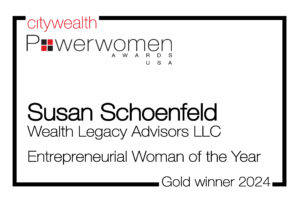
I am surprised and delighted to have been shortlisted for the Entrepreneurial Woman of the Year category of the Citywealth Powerwomen Awards (USA) 2024, which champions women in the wealth sector. Thank you so much to whomever nominated me, and congratulations to all the amazing professionals who were nominated this year! Please vote for me here:
https://www.citywealthmag.com/powerwomen-awards-usa-voting/ 
Voting closes December 1, 2023, and winners will be announced on March 13, 2024.

Read this short piece on “What is Family Governance?“, as published in Point of View online magazine on August 2, 2023, also a short video clip.


What is Family Governance?

Last updated: July 8, 2026

What is governance? As a term, governance is really just a fancy way of saying, how do we as a family make decisions? How do we as a family establish structures and a framework for generations who come after us to make decisions after the referees — the matriarch and patriarch — are no longer with us? After the referees are gone, the opportunity for bedlam can ensue.

The process of establishing a governance framework is best done before a crisis happens. It’s best achieved when a family is thinking about how as our family grows, whether through marriage or through births, how can we as a family, establish a system and a framework for the way we’re going to govern ourselves, the way we’re going to live our lives and make decisions, whether about a common investment vehicle, or a common vacation house. As I’m sure many of you can relate to, sometimes the biggest issues are who gets to redecorate the vacation house, or who gets to spend Christmas week at the family vacation house, or the prime summer week at the family lake house, to the exclusion of the others.

Establishing that framework before there’s a crisis is critical. I worked with a family a number of years ago; there was a son and two daughters. And the daughters in their youth had been sent away to boarding school on another continent and ended up marrying and settling there. Their children didn’t even know their cousins who were the offspring of the son who grew up in their home country.

The first family meeting that I organized for them was really a way to get them to know each other and get them to learn to trust each other a little bit in a in a non-threatening way. And through that process, we established a family council and a family assembly as a way of providing representative government so that these families could come together and effectively make decisions going forward about their shared investment assets and their shared common assets.